Greetings. First up, my apologies for my absence for the past few days - this was due to a medical emergency for my beloved Wife. She is now out of hospital and back home. I humbly ask if you could offer her your prayers and well-wishes to whatever form that the Great Ineffable Divine One takes which you offer your respect and devotions to.
Today I shall offer my views and opinions on the movie "Prophecy Uprising". This is the fourth instalment in the series - though it is a sort of reboot of the series and does not follow on directly from the first three movies. The movie is set in Romania and has a somewhat bleaker and darker tone to the first three movies which were excellent vehicles for Christopher Walken as the archangel Gabriel. In the future I intend to revisit these three movies and review them also. However, on with this review.....
The movie opens with a street drug-dealer called Serban being pursued by an unseen assailant. At one point he halts and looks down into a rain puddle, a faint shadow of something flying above is reflected in the water. He is eventually caught by a cop, Dani Simionescu (played by Sean Pertwee). Dani is an embittered and troubled man. He takes the dealer's ill-gotten money and later leaves it in the collection box at a local church. Returning to his car he find a young man in a long black coat leaning casually against the vehicle. The young man introduces himself in very clipped English tones as John Riegert (played by the aptly named John Light - for those who have ears to hear), an Interpol agent, who has been assigned to investigate a number of murders in which the hearts of the victims are being torn out. The pair get off to a strained relationship.
Back at the church we are introduced to the young heroine of this movie and its sequel, Alison (played by Kari Wuhrer) - who discovers and becomes the guardian of a sacred book called the Lexicon - a book which continues to write itself and will be the final revelation of God - revealing the very name of who shall be the Anti-Christ. Her angelic spirit guide Simon guides her in protecting both the book and herself. She is Dani's estranged sister.
So who, you may ask, is the antagonist? Well that would be Belial a body-jumping dark angel who seeks to obtain the book so he can create a new Hell. The bodies he abandons are the reason for the heart's being torn out. His final form being acted by Doug Bradley of Hellraiser fame.
John seems a strange and mysterious character. Dani goes online to find out about heart's being torn from corpses and at an Internet chat room discusses the situation with "Joseph_1995" (a reference to Joseph the coroner from the original trilogy). He is told that this is to prevent the corpses being possessed by entities.....angels....and that "all angels are terrifying". He is startled when John appears from nowhere behind him and asks for a ride somewhere. Eventually he takes Dani out to an abandoned and decaying mansion which was once a haunt of Romania's infamous Securitate. He uses the building itself and the very energies and ghost that exist there to force Dani to face his personal demons - that as a child he betrayed his parents to torture and death at the hands of the Securitate - his baby sister being spirited away to safety by a nurse. Dani is left extremely shaken and we are left in no doubt that there is much MUCH more to John than meets the eye.....yes he is an angel.....a particularly (in)famous one shall we say....and announces that right now he is "the lesser of two evils".
After a confrontation with Belial at the police station we are set for the final showdown with Alison, Dani and John, and Belial all headed to the abandoned Securitate mansion.
The journey of John and Dani to the mansion has two of my favourite scenes. In the first their car turns down a side street only to be blocked by a crowd of people. The following dialogue occurs:
John: "Just shove them out of the way"
Dani: "They're human beings John, not sheep"
John: "If you insist on splitting hairs"
Dani: "I do actually"
The car edges past the crowd.
John (in a most deadpan tone): "That one looks like a sheep"
The second is when Dani asks if he will ever see John in his "true form". John assures him that eventually he will. Dani asks if that's a promise. John assures him that it is. Now then....bear in mind Dani's past and his somewhat corrupt practices as a cop (beating suspects etc).....so who could John be? OK.....SPOILER ALERT.....
John is Satan!! The weirdest odd-couple buddy cop combination ever huh? A Romanian cop with a shady past and Satan. The dialogue between these two throughout the movie is priceless.....Pertwee and Light's performances are priceless.
So on to the final showdown. We learn that Alison was chosen specifically by the angel Simon to be the guardian of the Lexicon....the fate of the Cosmos lies squarely on her shoulders....this young man haunted by her past, because as John points out "broken people make the best pawns".
First Alison arrives at the mansion...and is confronted by the dark energies in the place. John and Dani arrive.....swiftly followed by Belial. Belial and John/Satan engage in some verbal sparring. Belial expresses how he is fed up that the Universe has become nothing but "endless shades of grey" and yearns for the old days when there "were saints and true demons". He demands the Lexicon. John/Satan says he wants Alison to keep it as the book repulses him. Belial chastises his former master for "going for the draw". John retaliates that there is "always tomorrow". John offers Alison his protection but points out that this can only apply whilst she remains in the mansion which as he points out is "Because this house, forgive the overused metaphor is Hell on Earth. It was ceded to me by virtue of the deeds committed here which makes it my domain. My house. My rules". Dani, who has been quietly observing proceedings now steps up and confronts Belial. He has emptied the magazine on his pistol of all but two bullets - one to kill the human vessel Belial currently occupies and the other to shoot himself when Belial possesses him (Alison of course now being under John's protection). John smiles wryly at this Mexican stand-off. Belial tries to rush Dani - BANG. Belial's human form crumples with a bullet in the head. Belial's spirit is not seen but we hear the fluttering of wings. Eventually Dani lets down his guard and Belial rushes in to him causing Dani to drop the gun. Dani is now possessed by Belial. Alison is forced to shoot him. Belial's spirit, with no-where left to go rushes headlong into John. John steps outside.
Alison eventually exists to a new morning. The sun has just risen. She sees John stood with his back towards her and approaches him. Arriving next to him we see that his eyes are now entirely black. He explains that Belial is now where he belongs, back with him. He explains Belial's motives and that there are some amongst the angels who fear what humanity may one day become and despise them for it. She asks him if he despises her. He says nothing, simply tenderly puts his hand on her face and in so doing gives her a flash-forward of what she will face. She is extremely shaken by this. John quietly walks off and then explodes into a flock of ravens...ahhhh, wonderfully Gothic n'est ce pas?...thus ends part 1 of the story.
This film is excellent and I much prefer it to the original trilogy, which were also classics, but somehow this one feels better. The storyline is stronger and grittier and sets up the next movie very well. In the sequel, Prophecy Forsaken, we concentrate much more on Alison and her role as the Guardian of the Lexicon. The acting in this movie is great and John Light is superb as john/Satan. Sean Pertwee is, as always, excellent. As I have stated the interaction between these two is worth watching the movie for on its own. The Bucharest setting of crumbling Communist era concrete blocks, ancient Orthodox churches and the decayed Baroque splendour of the old mansion add an excellent bleak Gothic back drop which suits the story of Angelic wars brought to Earth so well.
If you have not yet seen this movie than I strongly recommend you give it a try. This is an overlooked and underrated classic. Too many people dismiss it out of hand because of the absence of Walken and the lower budget.....but trust me.....this movie is a gem.
Here is an expanded clip of part of John and Belial's confrontation:
I found this on YouTube which shows John explode into the flock of ravens....and includes the very nice end credit music....which has a nice, Gothic, Within Temptation/Evanescence feel to it.
Showing posts with label Movie Review. Show all posts
Showing posts with label Movie Review. Show all posts
Thursday, 1 September 2011


Monday, 15 August 2011
Movie Review - "Dracula - The Dark Prince"
Vlad Dracula III, Prince of Wallachia, called Tepes, the "Impaler Prince", 15th Century Voivode, legend.....Messiah or Anti-Christ? Such is the premise of this entertaining low-budget movie.
It takes the historical Vlad as its inspiration and also melds the historical truth into the mythical fiction at the end of the film. The movie shows the dark politics of 15th century South Eastern Europe with smaller states caught between the powerful Hungarian Empire and the conquering Ottoman Empire. The people suffer as corrupt barons and nobles switch sides back and forth to line their own pockets. Prince Vlad Dracul (Dracula's father) is forced to send his sons, Radu and Vlad, to the Sultan's court but is himself betrayed and killed. Young Vlad escapes whilst Radu seems to take to the Sultan's court. Vlad gains the backing of the Hungarian King and returns to his native Wallachia in modern day Romania. Through raiding against the corrupt nobles (boyars) and with popular support he becomes Prince and marries his beloved Lydia.
Already, his heart is hot for vengeance and justice against the corrupt Boyars who betrayed his father and bleed the ordinary people dry (no pun intended!!). They are called to Vlad's castle for a feast...only to discover that the toothpicks are a little on the large side and end up in places that would make you anally retentive to say the least. It begins, the impaler legend is born and the ordinary people hail their new Prince as their Messiah - here to deliver them from the oppresive yoke of both the Boyars and the Turkish invaders, which he does through numerous battles and impalings.. To Vlad a son is born but Lydia starts to uncover Vlad's methods - in one scene we see a reference to the (in)famous story of the gold chalice at the well. Legends tells of a town in which there was a well. At this well, Vlad left a golden, jewel encrusted goblet for all to use from the lowliest peasant to the richest noble. To attempt to take it was to be turned into a human popsicle/lollipop. Lydia sees the chalice at the well and talks with a local peasant woman who talks proudly of her Prince and not so kindly of those who would try and steal it.....Lydia looks up horrified at the decaying corpses of the impaled. The Church is also starting to become a little dubious about Vlad's Drac-onian methods and a priest by the name of Stefan (Peter Weller) befriends Vlad and offers hims advice, amidst dark whispering amongst his fellow ecclesiasts that Vlad is the Anti-Christ not a Messiah for the Romanian people.

Lydia's mind finally seems to snap when her son seems to display his father's predilection for tough justice. She witnesses the smile on the boy's face upon seeing Turkish ambassadors who refuse to remove their turbans before Vlad have the same turbans nailed to their heads. Vlad has her sent to a convent. Ultimately, Vlad is driven out by the advancing Turks in part led by his younger brother Radu. He finds himself a prisoner of the Hungarians.
After several years he is released and is married off to one of the Hungarian King's daughters and offered their support - but only if he renounces the Orthodox faith and embraces the Roman Catholic. Vlad cares nothing for Church politics and the inherent hypocrisy there-in. He takes up Catholicism in name only as an expedient means of regaining his throne and liberating his people. The Orthodox hierarchy have him placed on trial as the Anti-Christ....and ultimately betray him to his brother Radu, who seemingly kills Vlad. He is entombed.
The story does not end there however.......for can the Dark Prince REALLY be slain?
This movie is great with good acting, especially from Rudolf Martin as Vlad (all brooding beetle-brow and rock singer hair) and Peter Weller as Father Stefan. You can only wonder what the movie would have been like with a big Hollywood budget - something of the epic scale of movies like "Gladiator", "Troy" or "Kingdom of Heaven" - we can but hope that such a movie is one day made (as long as it doesn't end up a travesty which so many recent Hollywood historical epics have been - Oliver Stone's "Alexander the Great" anybody?).
Despite its budgetary short-comings this movie is engaging, dark and moody. You are left to make up your own mind was Vlad a legendary hero of his people (think King Arthur or Robin Hood) as most Romanians still see him today; or was he the dark murderous madmen that many Medieval writers (normally his enemies interestingly enough) portrayed him to be. Messiah or Anti-Christ? You decide....but ask yourself.....what would you have done to protect your people in such dark and dangerous times....
It takes the historical Vlad as its inspiration and also melds the historical truth into the mythical fiction at the end of the film. The movie shows the dark politics of 15th century South Eastern Europe with smaller states caught between the powerful Hungarian Empire and the conquering Ottoman Empire. The people suffer as corrupt barons and nobles switch sides back and forth to line their own pockets. Prince Vlad Dracul (Dracula's father) is forced to send his sons, Radu and Vlad, to the Sultan's court but is himself betrayed and killed. Young Vlad escapes whilst Radu seems to take to the Sultan's court. Vlad gains the backing of the Hungarian King and returns to his native Wallachia in modern day Romania. Through raiding against the corrupt nobles (boyars) and with popular support he becomes Prince and marries his beloved Lydia.
Already, his heart is hot for vengeance and justice against the corrupt Boyars who betrayed his father and bleed the ordinary people dry (no pun intended!!). They are called to Vlad's castle for a feast...only to discover that the toothpicks are a little on the large side and end up in places that would make you anally retentive to say the least. It begins, the impaler legend is born and the ordinary people hail their new Prince as their Messiah - here to deliver them from the oppresive yoke of both the Boyars and the Turkish invaders, which he does through numerous battles and impalings.. To Vlad a son is born but Lydia starts to uncover Vlad's methods - in one scene we see a reference to the (in)famous story of the gold chalice at the well. Legends tells of a town in which there was a well. At this well, Vlad left a golden, jewel encrusted goblet for all to use from the lowliest peasant to the richest noble. To attempt to take it was to be turned into a human popsicle/lollipop. Lydia sees the chalice at the well and talks with a local peasant woman who talks proudly of her Prince and not so kindly of those who would try and steal it.....Lydia looks up horrified at the decaying corpses of the impaled. The Church is also starting to become a little dubious about Vlad's Drac-onian methods and a priest by the name of Stefan (Peter Weller) befriends Vlad and offers hims advice, amidst dark whispering amongst his fellow ecclesiasts that Vlad is the Anti-Christ not a Messiah for the Romanian people.

"I'm a guy who gets straight to the point. You can stake your reputation on it"
Lydia's mind finally seems to snap when her son seems to display his father's predilection for tough justice. She witnesses the smile on the boy's face upon seeing Turkish ambassadors who refuse to remove their turbans before Vlad have the same turbans nailed to their heads. Vlad has her sent to a convent. Ultimately, Vlad is driven out by the advancing Turks in part led by his younger brother Radu. He finds himself a prisoner of the Hungarians.
After several years he is released and is married off to one of the Hungarian King's daughters and offered their support - but only if he renounces the Orthodox faith and embraces the Roman Catholic. Vlad cares nothing for Church politics and the inherent hypocrisy there-in. He takes up Catholicism in name only as an expedient means of regaining his throne and liberating his people. The Orthodox hierarchy have him placed on trial as the Anti-Christ....and ultimately betray him to his brother Radu, who seemingly kills Vlad. He is entombed.
The story does not end there however.......for can the Dark Prince REALLY be slain?
This movie is great with good acting, especially from Rudolf Martin as Vlad (all brooding beetle-brow and rock singer hair) and Peter Weller as Father Stefan. You can only wonder what the movie would have been like with a big Hollywood budget - something of the epic scale of movies like "Gladiator", "Troy" or "Kingdom of Heaven" - we can but hope that such a movie is one day made (as long as it doesn't end up a travesty which so many recent Hollywood historical epics have been - Oliver Stone's "Alexander the Great" anybody?).
Despite its budgetary short-comings this movie is engaging, dark and moody. You are left to make up your own mind was Vlad a legendary hero of his people (think King Arthur or Robin Hood) as most Romanians still see him today; or was he the dark murderous madmen that many Medieval writers (normally his enemies interestingly enough) portrayed him to be. Messiah or Anti-Christ? You decide....but ask yourself.....what would you have done to protect your people in such dark and dangerous times....
Sunday, 14 August 2011
Movie Review - "Revelation"
Today's movie is for a little-known British film in the same vein as the "Da Vinci Code". This film was made contemperaneously with Dan Brown's bestseller yet treads similar ground: namely, that of the mythos of the Knights Templar, the bloodline of Jesus the Christed one and Mary Magdalene, the Cathars, Freemasonry and the early pre-Roman Catholic Christians. I much prefer this to Mr Brown's treatment - which at times felt, in my humble opinion, a little lightweight.
This film is choc-ful of British character actors of the calibre of Terence Stamp and Sir Derek Jacobi, to name but two. Adding a nicely Teutonic menace to proceedings is legendary Euro actor Udo Keir.
So, on to the story. Following the crucifixion, a group of early Christians make a relic of great importance....a reliquary of a rather special sort, referred to as the Loculus. Despite a Roman raid on the group and the execution of their leader, the relic escapes. Presiding over the execution is a Roman general with a particularly cold and menacing appearance. 1200 years later, in the South of France, a Jewish alchemist is in the midst of performing a ritual when a group of flagellants ( I said, flagellants, not flatulents - so stop sniggering at the back!!) accompanied by Knights Templar break in on proceedings. The priest leading the flagellants is concerned with killing the alchemist and his family, purely by dint of their Hebrew origin. The leader of the Templars however, is interested solely in the relic. Hmm.....that Templar sure looks familiar....
Cut to modern times and a paranoid, scruffy hippy type is on an expedition to return the relic to the isle of Patmos (of St John the Divine - he of Revelations fame). Scruffy hippy guy keeps in contact with his leader, a posh English chap by the name of Magnus Martel (Terence Stamp); whom we later learn is a Knight-Commander in a latter day, quasi-Masonic Templar Order. Martel's son, Jake, is seen being released from prison and we learn he is a master codebreaker. He receives a call to visit his father's estate and on his arrival finds himself in the middle of a quest to break the hidden code of the Loculus. Aside from himself and the scientists, there is also a young female mystic and alchemist by the name of (ahem) Myra.
Martel receives disturbing calls from someone claiming to be the Grand Master of the Order - hey this guy looks just like the Roman General and the Knight Templar we saw earlier - he too is seeking the Loculus....and it is from him that Magnus is wishing to keep the Loculus hidden. One dark stormy night (well it would be wouldn't it?) an otherwordly raid is launched on Martel's gloomy Gothic castle by shadow-figures and dark hounds. Magnus Martel is killed by being skinned alive. The scientists are all turned into human torches and only Martel junior and Myra escape.
What follows is a race/quest across Europe, taking in locations such as Rennes-le-Chateau (famed in Knights Templar lore and the home of the Sauniere mysteries), Malta and Patmos and with a great little flashback interlude with Ron Moody as Sir Isaac Newton, reminding us of his studies into alchemy. Myra and Jake are joined by a shady Catholic priest (yeah - you can guess how that one works out) and are constantly pursued by dark forces. The movie is a great and entertaining romp although it is let down by the sandy demise of one of the main characters - unfortunately, this moment will make you laugh rather than fill you with any sense of tragic cathar-sis (see what I did there - ahem). In it we see the realisation of the main protagonists of their ancestral bloodlines, find out why the dark Grand Master is pursuing them, see said Grand Master's role and influence in organisations such as the Vatican and even the US military and see the birth of two children...each born with certain DNA....but with only one's birth being celebrated en masse around the globe and protected by the Vatican....and one "modest Cardinal" - hey that dude looks familiar!! The other is born quietly and without pomp and fanfare...yet his birth is heralded by a shooting star. Setting up a sequel that so far has never been made.
I must admit - I greatly prefer this to the "Da Vinci Code", despite this movie's almost "Omen" like overtones. If only the sandy death scene had been slightly better done......oh dear.....one of your abiding memories of the film will unfortunately be that scene; which is a shame because beyond that is a great occult movie. So, if you want a Grail/Magdalene/Templar movie with a bit more gravitas and less of the "oooh aren't I clever" ramblings of Dan Brown - then give this little heard-of movie a try. The DVD also has some great little extras too.
Until next time my Batlings.....
This film is choc-ful of British character actors of the calibre of Terence Stamp and Sir Derek Jacobi, to name but two. Adding a nicely Teutonic menace to proceedings is legendary Euro actor Udo Keir.
So, on to the story. Following the crucifixion, a group of early Christians make a relic of great importance....a reliquary of a rather special sort, referred to as the Loculus. Despite a Roman raid on the group and the execution of their leader, the relic escapes. Presiding over the execution is a Roman general with a particularly cold and menacing appearance. 1200 years later, in the South of France, a Jewish alchemist is in the midst of performing a ritual when a group of flagellants ( I said, flagellants, not flatulents - so stop sniggering at the back!!) accompanied by Knights Templar break in on proceedings. The priest leading the flagellants is concerned with killing the alchemist and his family, purely by dint of their Hebrew origin. The leader of the Templars however, is interested solely in the relic. Hmm.....that Templar sure looks familiar....
Cut to modern times and a paranoid, scruffy hippy type is on an expedition to return the relic to the isle of Patmos (of St John the Divine - he of Revelations fame). Scruffy hippy guy keeps in contact with his leader, a posh English chap by the name of Magnus Martel (Terence Stamp); whom we later learn is a Knight-Commander in a latter day, quasi-Masonic Templar Order. Martel's son, Jake, is seen being released from prison and we learn he is a master codebreaker. He receives a call to visit his father's estate and on his arrival finds himself in the middle of a quest to break the hidden code of the Loculus. Aside from himself and the scientists, there is also a young female mystic and alchemist by the name of (ahem) Myra.
Martel receives disturbing calls from someone claiming to be the Grand Master of the Order - hey this guy looks just like the Roman General and the Knight Templar we saw earlier - he too is seeking the Loculus....and it is from him that Magnus is wishing to keep the Loculus hidden. One dark stormy night (well it would be wouldn't it?) an otherwordly raid is launched on Martel's gloomy Gothic castle by shadow-figures and dark hounds. Magnus Martel is killed by being skinned alive. The scientists are all turned into human torches and only Martel junior and Myra escape.
What follows is a race/quest across Europe, taking in locations such as Rennes-le-Chateau (famed in Knights Templar lore and the home of the Sauniere mysteries), Malta and Patmos and with a great little flashback interlude with Ron Moody as Sir Isaac Newton, reminding us of his studies into alchemy. Myra and Jake are joined by a shady Catholic priest (yeah - you can guess how that one works out) and are constantly pursued by dark forces. The movie is a great and entertaining romp although it is let down by the sandy demise of one of the main characters - unfortunately, this moment will make you laugh rather than fill you with any sense of tragic cathar-sis (see what I did there - ahem). In it we see the realisation of the main protagonists of their ancestral bloodlines, find out why the dark Grand Master is pursuing them, see said Grand Master's role and influence in organisations such as the Vatican and even the US military and see the birth of two children...each born with certain DNA....but with only one's birth being celebrated en masse around the globe and protected by the Vatican....and one "modest Cardinal" - hey that dude looks familiar!! The other is born quietly and without pomp and fanfare...yet his birth is heralded by a shooting star. Setting up a sequel that so far has never been made.
I must admit - I greatly prefer this to the "Da Vinci Code", despite this movie's almost "Omen" like overtones. If only the sandy death scene had been slightly better done......oh dear.....one of your abiding memories of the film will unfortunately be that scene; which is a shame because beyond that is a great occult movie. So, if you want a Grail/Magdalene/Templar movie with a bit more gravitas and less of the "oooh aren't I clever" ramblings of Dan Brown - then give this little heard-of movie a try. The DVD also has some great little extras too.
Until next time my Batlings.....
Wednesday, 10 August 2011
Movie Review - "The Long Hair of Death"/"I Lunghi Capellie della Morte"
Today's post is a Movie review for another 60's Italian Gothic horror classic - The Long Hair of Death. This is a 1964 movie directed by Antonio Margheriti and starring George Ardisson, Barbara Steele and Halina Zalewska.
In the late 15th Century a corrupt local Lord, Humbold, and his snivelling son, Kurt, have a woman accused of witchcraft and sentenced to death by burning at the stake. Her eldest daughter, Helen Karnstein, sneaks to see the Lord, knowing that it is the son who has had her mother set up on this trumped up charge. The foul old letch says he will save old mother Karnstein if Helen will yield herself to him.

Regardless the older woman is burnt and as she is being burnt she screams her curse against the Lord and his family. The younger daughter, Elizabeth, is forced to watch her mother burn and the elder Karnstein girl hears her mother's cries whilst the Lord is trying to have his wicked way. She flees from the room, accusing him of being the murderer that he is. Later she visits her mother's ashes at the scene of execution and hears the voice of her mother's spirit urge vengeance against Humbold and his son. She leaves town but is pursued by Humbold who silences her by pushing her to her death over a ravine.

Several years later and we find that the younger Karnstein girl, Elizabeth, has now grown up and been taken in by Humbold's family. Kurt desires her and a marriage is arranged despite her disgust for him and his bloodline. On their wedding night Kurt forces himself on his relucant bride and rapes her. All seems well in Kurt's province until an outbreak of plague enters town. A church service is arranged by the local nobility to pray for deliverance from this petilence. That night a raging thunderstorm breaks and a bolt of lightning strikes an unknown grave, splitting the earth and coffin open. Inside, the decayed corpse starts to regenerate.

Cut to the church. Humbold arrives with his son....the guilt of his earlier sins gnawing at the old man's conscience. A huge crash of thunder rings and the church doors crash open....in staggers a young woman. Only Humnold recognises her and immediately collapses to the ground clutching his chest screaming "No, No, No" - he promptly expires as the storm rages. The young woman sways, swoons and falls to the floor.

The next morning the young woman awakens in what is now Kurt's castle. She introduces herself as "Mary" and has a strange stilted conversation with Elizabeth. Kurt enters and it is plain his adulterous dark soul is already full of desire for Mary. Mary soon embarks on an affair with Kurt and a plot is hatched to do away with the seemingly dreary Elizabeth - but is all as it seems. Cross and double-cross follow with lots of scenes of long gloomy castle corridors and decaying, cobwebbed filled crypts....but is all as it seems. Who is Mary? Why does she bear an uncanny resemblance to the late Helen Karnstein? Is Elizabeth dead or not?....and just what will happen when the locals (in a film that pre-dates the "Wicker Man" by several years) burn their wicker statue of "Death".

This film is a slow-burner full of atmosphere and requires patience. It does not jump into shock action like many horror films and only in the last few minutes is the full supernatural content revealed. the cast all put in great performances - Giulano Rafaelli captures the corrupt "dirty old man" letching of Humbold perfectly, George Ardisson oozes the arrogance and debased lustfulness of Kurt excellently - you in no doubt that this is a dark souled spoiled brat princeling, Halina Zalewski portrays her character's arc from dour and demure young woman, to suspicious spurned wife, to ultimately victorious avenged lady very well, and Barbara Steele gives her dual role as Helen and Mary her usual high quality performance, moving from naive and hunted young Helen, to conniving, scheming seductress Mary and then back to avenging spirit Helen with casual ease.
If you are after a movie that will deliver instant gore and shocks but has little in atmosphere then this film is not for you. If however you want a movie that will build up a Poe-like growing sense of unease and creeping insanity, and deliver Medieval themed Gothic visuals, with great atmospherics and superb acting...well, then, what are you waiting for?

Regardless the older woman is burnt and as she is being burnt she screams her curse against the Lord and his family. The younger daughter, Elizabeth, is forced to watch her mother burn and the elder Karnstein girl hears her mother's cries whilst the Lord is trying to have his wicked way. She flees from the room, accusing him of being the murderer that he is. Later she visits her mother's ashes at the scene of execution and hears the voice of her mother's spirit urge vengeance against Humbold and his son. She leaves town but is pursued by Humbold who silences her by pushing her to her death over a ravine.
Several years later and we find that the younger Karnstein girl, Elizabeth, has now grown up and been taken in by Humbold's family. Kurt desires her and a marriage is arranged despite her disgust for him and his bloodline. On their wedding night Kurt forces himself on his relucant bride and rapes her. All seems well in Kurt's province until an outbreak of plague enters town. A church service is arranged by the local nobility to pray for deliverance from this petilence. That night a raging thunderstorm breaks and a bolt of lightning strikes an unknown grave, splitting the earth and coffin open. Inside, the decayed corpse starts to regenerate.

Cut to the church. Humbold arrives with his son....the guilt of his earlier sins gnawing at the old man's conscience. A huge crash of thunder rings and the church doors crash open....in staggers a young woman. Only Humnold recognises her and immediately collapses to the ground clutching his chest screaming "No, No, No" - he promptly expires as the storm rages. The young woman sways, swoons and falls to the floor.

The next morning the young woman awakens in what is now Kurt's castle. She introduces herself as "Mary" and has a strange stilted conversation with Elizabeth. Kurt enters and it is plain his adulterous dark soul is already full of desire for Mary. Mary soon embarks on an affair with Kurt and a plot is hatched to do away with the seemingly dreary Elizabeth - but is all as it seems. Cross and double-cross follow with lots of scenes of long gloomy castle corridors and decaying, cobwebbed filled crypts....but is all as it seems. Who is Mary? Why does she bear an uncanny resemblance to the late Helen Karnstein? Is Elizabeth dead or not?....and just what will happen when the locals (in a film that pre-dates the "Wicker Man" by several years) burn their wicker statue of "Death".

This film is a slow-burner full of atmosphere and requires patience. It does not jump into shock action like many horror films and only in the last few minutes is the full supernatural content revealed. the cast all put in great performances - Giulano Rafaelli captures the corrupt "dirty old man" letching of Humbold perfectly, George Ardisson oozes the arrogance and debased lustfulness of Kurt excellently - you in no doubt that this is a dark souled spoiled brat princeling, Halina Zalewski portrays her character's arc from dour and demure young woman, to suspicious spurned wife, to ultimately victorious avenged lady very well, and Barbara Steele gives her dual role as Helen and Mary her usual high quality performance, moving from naive and hunted young Helen, to conniving, scheming seductress Mary and then back to avenging spirit Helen with casual ease.
If you are after a movie that will deliver instant gore and shocks but has little in atmosphere then this film is not for you. If however you want a movie that will build up a Poe-like growing sense of unease and creeping insanity, and deliver Medieval themed Gothic visuals, with great atmospherics and superb acting...well, then, what are you waiting for?
Monday, 8 August 2011
Movie Review - "Dracula 2000"
Last time I featured an old classic vampire movie. Today I shall review a more recent movie - though not so recent that vampires sparkle and have teen "issues" - as the classic statement goes "real vampires don't sparkle"....ugh....all that adolescent and pre-pubescent angst...pur-lease!!!!
Anyway, enough rambling and on with the movie review. This movie stars Christopher Plummer, Johnnie Lee Miller and Gerard "This is Sparta!" Butler. Plummer plays Van Helsing - who has kept himself alive for all these years by injecting himself with blood drained from a certain well-preserved "corpse" he keeps in his antique dealership vaults. A gang of theives perform a heist at the old Prof's place and steal a certain coffin - awakening a long dormant pointy-toothed Count of great renown.
Much of the action takes place in New Orleans during Mardi Gras season. Seems old Vlad takes a shine to Van Helsing's daughter Mary (that's Mary...ya know...as in Magdalene - pay attention as there is an amazing and different plot twist on our favourite Vampire Prince's origins in this movie). Anyway, lots of people get turned into Vlad's henchmen and during one set to in which one of the undead is killed by him, Johnny Lee Miller gives the world a classic line..."Never, EVER, f**k with an antiques dealer".
Gerard Butler portrays Dracula with much aplomb - imagine a cross between a particularly suave rock star and a male model from a shampoo commercial and you kind of get the picture. He obviously enjoyed the role, and manages to stay just the right side of camp. while getting to unleash some killer one-liners and even a nod to Bela Lugosi's portrayal with the line "I never drink....coffee". At one point someone tries to stop ol' Drac by flashing a Bible at him. He casually grabs it from them, tosses it to one side and sneers "propaganda".

Ultimately, we cut to the climax and get the reveal on who and what Drac's origins are (and in so doing, find out why he doesn't like silver, crucifixes and the like) and also who Mary Van Helsing was in a previous life - hey imagine if Bram Stoker and Dan Brown were forced to write a Dracula for the modern era.
So, whilst this movie may never make lists of "classic" vampire movies, I really enjoyed it - even despite it's loudness for the MTV generation (although it does have the classic "Bloodline" by Slayer in the soundtrack, so the loudness isn't all bad). I particularly enjoyed the Biblical twist too, which had some great visuals in the flashback scenes and another great line, "Blood of my Blood, Flesh of my Flesh". Ah, Vlad Dracula, Tepes, Dragon Prince of Wallachia.....interesting origin presented for you here. Give this movie a try, keep an open mind and you might just enjoy this New Testament of Dracula.
For now my Strigoi.....DO have nightmares.
Anyway, enough rambling and on with the movie review. This movie stars Christopher Plummer, Johnnie Lee Miller and Gerard "This is Sparta!" Butler. Plummer plays Van Helsing - who has kept himself alive for all these years by injecting himself with blood drained from a certain well-preserved "corpse" he keeps in his antique dealership vaults. A gang of theives perform a heist at the old Prof's place and steal a certain coffin - awakening a long dormant pointy-toothed Count of great renown.
Much of the action takes place in New Orleans during Mardi Gras season. Seems old Vlad takes a shine to Van Helsing's daughter Mary (that's Mary...ya know...as in Magdalene - pay attention as there is an amazing and different plot twist on our favourite Vampire Prince's origins in this movie). Anyway, lots of people get turned into Vlad's henchmen and during one set to in which one of the undead is killed by him, Johnny Lee Miller gives the world a classic line..."Never, EVER, f**k with an antiques dealer".
Gerard Butler portrays Dracula with much aplomb - imagine a cross between a particularly suave rock star and a male model from a shampoo commercial and you kind of get the picture. He obviously enjoyed the role, and manages to stay just the right side of camp. while getting to unleash some killer one-liners and even a nod to Bela Lugosi's portrayal with the line "I never drink....coffee". At one point someone tries to stop ol' Drac by flashing a Bible at him. He casually grabs it from them, tosses it to one side and sneers "propaganda".

"New Haemoglobin for men. Because I'm worth it!"
Ultimately, we cut to the climax and get the reveal on who and what Drac's origins are (and in so doing, find out why he doesn't like silver, crucifixes and the like) and also who Mary Van Helsing was in a previous life - hey imagine if Bram Stoker and Dan Brown were forced to write a Dracula for the modern era.
So, whilst this movie may never make lists of "classic" vampire movies, I really enjoyed it - even despite it's loudness for the MTV generation (although it does have the classic "Bloodline" by Slayer in the soundtrack, so the loudness isn't all bad). I particularly enjoyed the Biblical twist too, which had some great visuals in the flashback scenes and another great line, "Blood of my Blood, Flesh of my Flesh". Ah, Vlad Dracula, Tepes, Dragon Prince of Wallachia.....interesting origin presented for you here. Give this movie a try, keep an open mind and you might just enjoy this New Testament of Dracula.
For now my Strigoi.....DO have nightmares.
Saturday, 6 August 2011
Movie Review - "Black Sunday"
"Black Sunday" is almost universally hailed as one of the greatest Gothic genre movies of all time, and not without very good reason. The film was directed by Italian horror maestro Mario Bava, and starred legendary horror actress, Barbara Steele.

This movie just oozes Gothic atmosphere out of every pore; ruined Gothic crypts, moonlight pouring through wispy clouds, fog shrouded cemetaries and forests, slow-motion scenes of black horse-drawn carriages emerging through the mist, the Inquisition burning witches, and said witches returning from the grave as vampires to exact their vengeance.

The plot is loosely based upon a short story by Gogol called "The Vij". In 17th century Moldavia, Princess Asa Vajda (Barbara Steele) is denounced as a witch by her brother, the Grand Inquisitor of the region, and sentenced to be burnt at the stake together with her lover, Prince Javutic. In a surprisingly gory scene for its era (1960) we see the black hooded executioner hammer a nailed demonic-visaged mask to Asa Vajda's face.
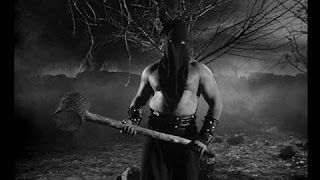
Just prior to this she issues her curse against her brother that she will return from the grave to bring bloody vengeance against the family and its descendants. As the inquisitors then set their flaming brands to the kindling set about Asa's feet, ready to burn her corpse at the stake, a flash rain storm appears from nowhere sending the inquisitors, and the rampant peasant mob attending the execution, scattering in all directions. The flames are extinguished.

Cut to the 19th century and two Doctors are travelling through the region. They are warned by local rustic types not to travel through the forest as there is an evil lurking there. Of course, they dismiss this as superstitious nonsense and proceed regardless. They have to stop due to damage to a wheel on their coach. On so doing, the Doctors see a ruined chapel/crypt, all moody moonlight-soaked Gothic arches, and approach to investigate. Inside they find a tomb, in which is the corpse of a woman wearing a demonic mask, a glass panel over the face allowing the shadow of a crucifix to be positioned over the corpse constantly. The elder of the two doctors, Kruvajan, is attacked by a large bat and in defending himself from it manges to smash the crucifix and the glass. In breaking the glass, he cuts his hand.....blood drips from the wound onto the face beneath.....and thus it begins....

The doctors are then introduced to the current members of the Vajda line....the first of whom they meet at the cript, Princess Katja Vajda - the very likeness of her ancestor's image....and soon to be the object of her ancestor's quest for revenge

....as the undead Vajda says to her latter day doppelganger "You didn't know your body had been consecrated to belong to Satan, but you sensed it, didn't you?".

The rest of the movie concerns the battle between the rejuvenated vampiric Asa Vajda and her lover Javutic on the one hand, and the Vajda descendants on the other, the prize being the very body and soul of young Katja.
The film was very shocking for its time and was initially banned in some countries. It strangely manages to be a product both of the past and the future. It's imagery is very much a throwback to the old 1930's Universal horror movies of James Whale and Tod Browning, yet it's storyline and the fact that the antagonist was a strong and powerful female nodded towards the future.
It was the first major role for Barbara Steele, who went on to star in many European genre movies during the 1960s. It was her offbeat and disturbing face that appealed to the horror directors of the time - her ability to change from looking innocent and angelic one moment to downright diabollic and deranged the next. As she herself put it, she always got to play "predatory bitch goddesses" - though she often played dual roles one sweet and innocent such as Katja in this movie, and the other dark and fiendish such as Asa. Very few actors or actresses have ever been able to portray such duality so effectively, representing both light and dark so easily within the same movie.
So, in a way this film opened the door for women to finally be able to take the lead in Horror stories as well as the men, and for that we must thank Mario Bava and Barbara Steele, both of whom went on to achieve legendary cult status.
There are two versions of the movie available on DVD:
http://www.amazon.co.uk/gp/product/B0006UG69S/ref=as_li_tf_tl?ie=UTF8&tag=thegotharstom-21&linkCode=as2&camp=1634&creative=6738&creativeASIN=B0006UG69S
http://www.amazon.co.uk/gp/product/B000UVV238/ref=as_li_tf_tl?ie=UTF8&tag=thegotharstom-21&linkCode=as2&camp=1634&creative=6738&creativeASIN=B000UVV238

This movie just oozes Gothic atmosphere out of every pore; ruined Gothic crypts, moonlight pouring through wispy clouds, fog shrouded cemetaries and forests, slow-motion scenes of black horse-drawn carriages emerging through the mist, the Inquisition burning witches, and said witches returning from the grave as vampires to exact their vengeance.
The plot is loosely based upon a short story by Gogol called "The Vij". In 17th century Moldavia, Princess Asa Vajda (Barbara Steele) is denounced as a witch by her brother, the Grand Inquisitor of the region, and sentenced to be burnt at the stake together with her lover, Prince Javutic. In a surprisingly gory scene for its era (1960) we see the black hooded executioner hammer a nailed demonic-visaged mask to Asa Vajda's face.

Just prior to this she issues her curse against her brother that she will return from the grave to bring bloody vengeance against the family and its descendants. As the inquisitors then set their flaming brands to the kindling set about Asa's feet, ready to burn her corpse at the stake, a flash rain storm appears from nowhere sending the inquisitors, and the rampant peasant mob attending the execution, scattering in all directions. The flames are extinguished.

Cut to the 19th century and two Doctors are travelling through the region. They are warned by local rustic types not to travel through the forest as there is an evil lurking there. Of course, they dismiss this as superstitious nonsense and proceed regardless. They have to stop due to damage to a wheel on their coach. On so doing, the Doctors see a ruined chapel/crypt, all moody moonlight-soaked Gothic arches, and approach to investigate. Inside they find a tomb, in which is the corpse of a woman wearing a demonic mask, a glass panel over the face allowing the shadow of a crucifix to be positioned over the corpse constantly. The elder of the two doctors, Kruvajan, is attacked by a large bat and in defending himself from it manges to smash the crucifix and the glass. In breaking the glass, he cuts his hand.....blood drips from the wound onto the face beneath.....and thus it begins....
The doctors are then introduced to the current members of the Vajda line....the first of whom they meet at the cript, Princess Katja Vajda - the very likeness of her ancestor's image....and soon to be the object of her ancestor's quest for revenge
....as the undead Vajda says to her latter day doppelganger "You didn't know your body had been consecrated to belong to Satan, but you sensed it, didn't you?".
The rest of the movie concerns the battle between the rejuvenated vampiric Asa Vajda and her lover Javutic on the one hand, and the Vajda descendants on the other, the prize being the very body and soul of young Katja.
The film was very shocking for its time and was initially banned in some countries. It strangely manages to be a product both of the past and the future. It's imagery is very much a throwback to the old 1930's Universal horror movies of James Whale and Tod Browning, yet it's storyline and the fact that the antagonist was a strong and powerful female nodded towards the future.
It was the first major role for Barbara Steele, who went on to star in many European genre movies during the 1960s. It was her offbeat and disturbing face that appealed to the horror directors of the time - her ability to change from looking innocent and angelic one moment to downright diabollic and deranged the next. As she herself put it, she always got to play "predatory bitch goddesses" - though she often played dual roles one sweet and innocent such as Katja in this movie, and the other dark and fiendish such as Asa. Very few actors or actresses have ever been able to portray such duality so effectively, representing both light and dark so easily within the same movie.
So, in a way this film opened the door for women to finally be able to take the lead in Horror stories as well as the men, and for that we must thank Mario Bava and Barbara Steele, both of whom went on to achieve legendary cult status.
http://www.amazon.co.uk/gp/product/B0006UG69S/ref=as_li_tf_tl?ie=UTF8&tag=thegotharstom-21&linkCode=as2&camp=1634&creative=6738&creativeASIN=B0006UG69S
http://www.amazon.co.uk/gp/product/B000UVV238/ref=as_li_tf_tl?ie=UTF8&tag=thegotharstom-21&linkCode=as2&camp=1634&creative=6738&creativeASIN=B000UVV238
Subscribe to:
Posts (Atom)